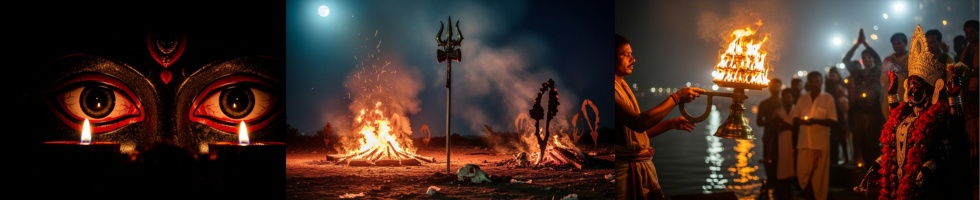

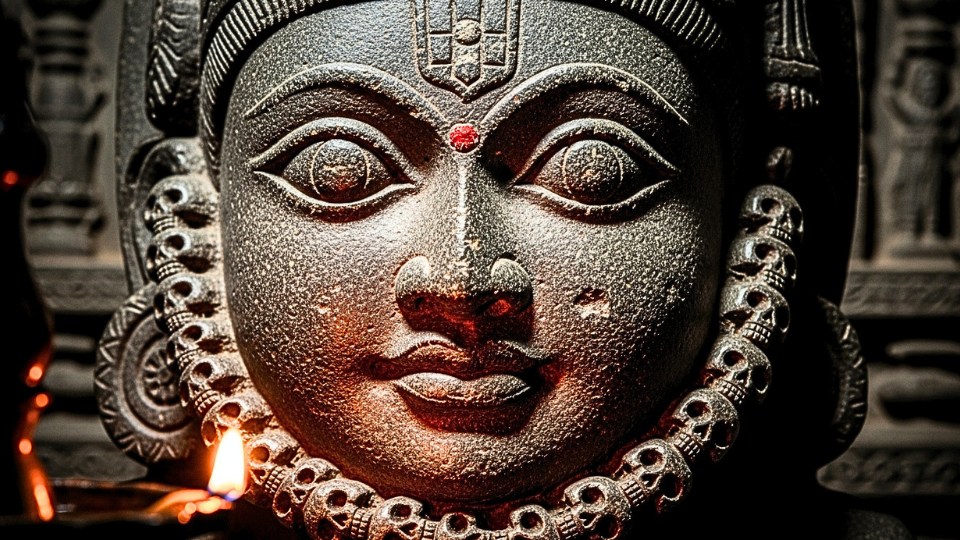
Rudra Nath Ji Maharaj On the sacred land of India, where spirituality and mysticism have been deeply rooted for centuries, there echo the extraordinxists a collection of extraordinary tales that have become whispered legends among sincere spiritual seekers. The shamshan ghat stories of Rudra Nath Ji Maharaj read like chapters from an ancient scripture, written in the language of courage, compassion, and divine intervention.
These are not mere ghost stories or supernatural thrillers. They are profound spiritual accounts of a master who transformed cremation grounds into classrooms of wisdom and places of fear into sanctuaries of healing, liberation, and transcendence. Rudra Nath Ji Maharaj
The Haunted Shamshan of Kashi Vishwanath
The Night When Time Stood Still
One of the earliest and most famous shamshan ghat stories of Rudra Nath Ji Maharaj takes us to the ancient cremation ground near the Kashi Vishwanath Temple in Varanasi. For generations, cremation attendants whispered about a mysterious woman in white who appeared every new moon night—crying inconsolably and wandering among the funeral pyres in search of something she could never find.
An elderly Dom (traditional cremation ground keeper) finally shared this story with Rudra Nath Ji. His voice trembled as he described how the spirit’s sorrowful cries were so overwhelming that even the most hardened workers fled the ghat in terror.
The Tragedy of Kamala Devi
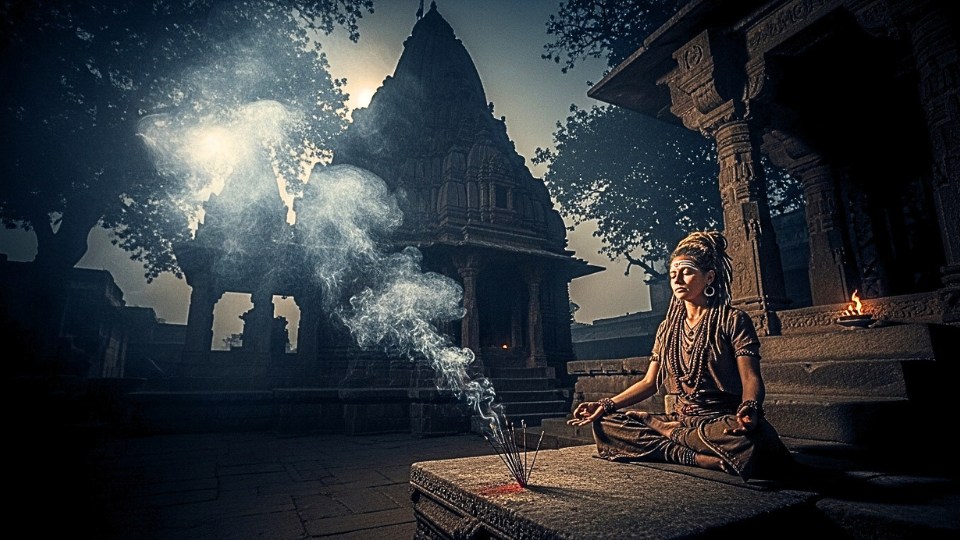
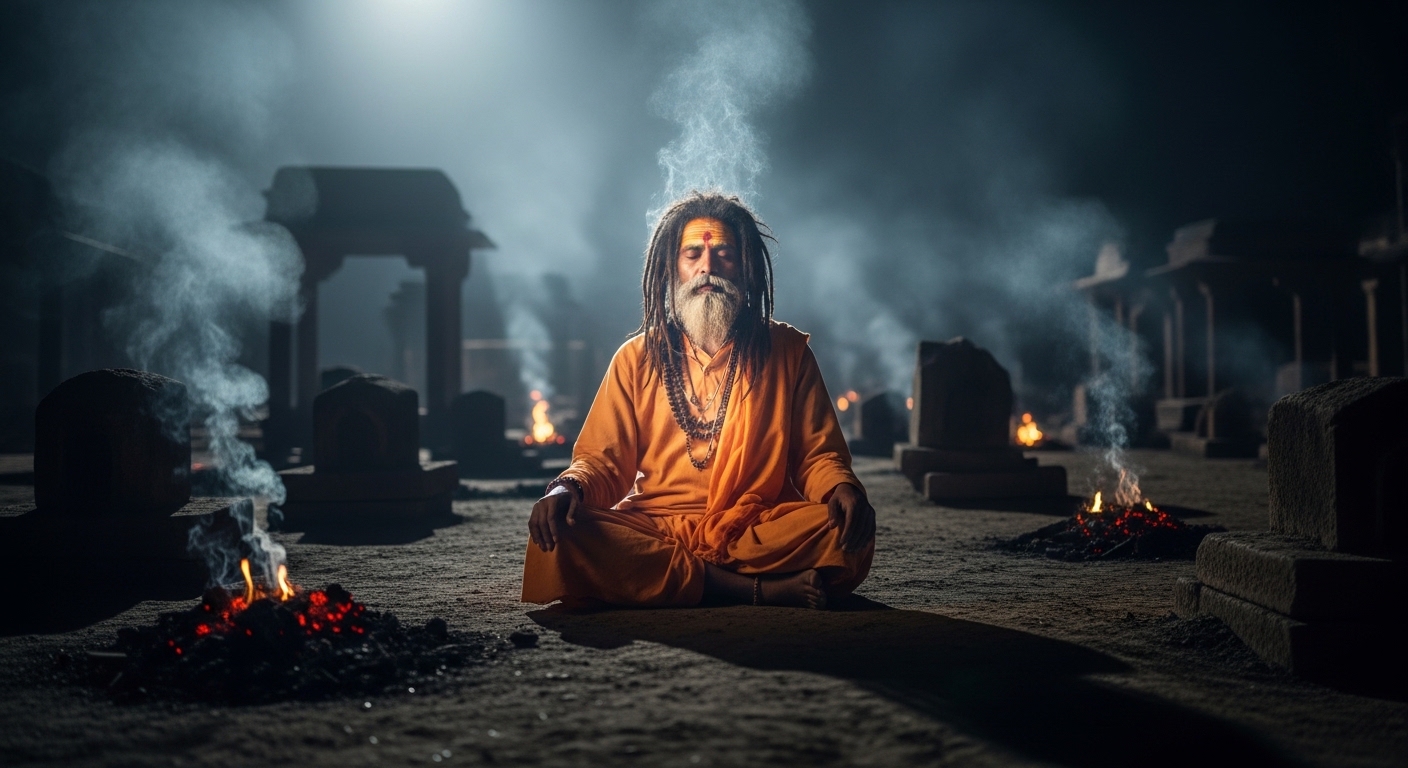
On the next new moon night, Rudra Nath Ji seated himself in deep meditation near the main cremation area. As midnight approached, the signs appeared: the air grew unnaturally cold, the flames of the pyres dimmed, and a silence descended so heavy it felt as if time itself had paused.
Then she emerged—a radiant figure draped in a sari that shimmered like moonlight. Her beauty was undeniable, yet her face carried centuries of unbearable grief. Through spiritual communion, her story slowly unfolded.
She was Kamala Devi, a young bride from the eighteenth century who had died of plague just three days after her wedding. In the chaos of the epidemic, her body was cremated without proper rituals. Worse still, her wedding jewelry—especially her mangalsutra, the sacred symbol of marriage—was stolen before her final rites. Rudra Nath Ji Maharaj
For over three hundred years, her soul had returned to the cremation ground, believing she could not find peace or reunite with her husband in the afterlife without her sacred symbol of marriage. Her devotion gave her the power to manifest—but also bound her to endless suffering.
The Ritual of Sacred Reunion
Rudra Nath Ji understood that logic alone could not heal a belief sustained by centuries of pain. He researched her lineage and located her living descendants. With their help, a mangalsutra was crafted according to eighteenth-century tradition and blessed at the same temple where Kamala Devi had once been married. Rudra Nath Ji Maharaj
On the following new moon, a sacred ceremony was performed at the cremation ground. As the mangalsutra was offered into the sacred fire, Kamala Devi’s form transformed. Her grief dissolved into peace, her body turned luminous, and she bowed in gratitude before merging into golden light that rose into the night sky.
From that night onward, the cremation ground felt lighter. The long-standing heaviness vanished, and the workers reported that the site finally felt peaceful.
The Warrior’s Unfinished Battle
Echoes from Kurukshetra
Another extraordinary story unfolded at a cremation ground built on land once connected to the legendary battlefield of Kurukshetra. For months, locals reported hearing war cries, clashing weapons, and feeling an intense sense of conflict during funeral rites. Rudra Nath Ji Maharaj
Rudra Nath Ji discovered that an ancient warrior spirit—over five thousand years old—was still bound to the battlefield mindset. He identified himself as a relative of Abhimanyu and a soldier of the Pandava army, unaware that the great war had ended. Rudra Nath Ji Maharaj
His final living moment had occurred just before Lord Krishna’s concluding teachings. Having never witnessed peace, his soul remained trapped in eternal vigilance.
The Divine Revelation
Over seven nights, Rudra Nath Ji guided the warrior through divine visions—revealing the end of the war, Krishna’s teachings on detachment, the cycle of time, and the true meaning of dharma. On the final night, the warrior’s armor dissolved, his weapons turned into flowers, and his restless spirit found eternal peace.
The Possessed Child of Delhi
When Innocence Becomes a Battlefield
One of the most challenging cases involved an eight-year-old boy named Arjun, who displayed terrifying signs of possession—speaking unknown languages, demonstrating unnatural strength, and revealing knowledge far beyond his age. Rudra Nath Ji Maharaj
The possessing entity was not an ordinary spirit, but a deceased tantric practitioner who had attempted forbidden rituals to achieve immortality. When his ritual failed, his consciousness wandered in desperation for decades. Rudra Nath Ji Maharaj
Through a three-night spiritual confrontation, Rudra Nath Ji uncovered that the spirit’s actions were driven by fear of death. By guiding the entity toward surrender and acceptance, the possession ended peacefully, and the child returned to normal health.
The Merchant’s Guilty Secret
Wealth Built on Suffering
A wealthy businessman sought help after generations of unexplained deaths in his family. Spiritual investigation revealed that his grandfather had exploited poor farmers during the droughts of the 1940s, seizing their land and causing widespread suffering.
The restless spirits of those wronged were bound to the cremation ground where the family conducted funeral rites. A nine-night ceremony of acknowledgment, restitution, and reconciliation was performed. Financial compensation was provided to descendants of the affected families, and forgiveness was achieved.
The curse was lifted, the family’s health restored, and their prosperity returned—this time guided by ethical values and compassion.
The Healer’s Own Test
During a retreat near Kedarnath, Rudra Nath Ji himself faced a profound spiritual examination. A council of higher beings tested his courage, humility, detachment, and commitment to service. Offered personal liberation and worldly recognition, he chose continued service.
He was blessed with deeper spiritual authority and warned that greater power demands greater responsibility. Rudra Nath Ji Maharaj
Conclusion
The shamshan ghat stories of Rudra Nath Ji Maharaj are not tales of fear, but of transformation. They show how compassion, wisdom, and authentic spiritual authority can heal even the deepest wounds—whether of the living or the departed.
Through his work, cremation grounds become places of liberation, and death reveals itself not as an enemy, but as a teacher. These stories stand as living proof that no soul is beyond hope, and no darkness beyond the reach of divine light. Rudra Nath Ji Maharaj




Leave a Reply